Lambrusco op zondag – Tien weken lang schaven aan het imago

🍷 Inleiding – Lambrusco: van verguisd naar verfijnd

Wat is dat toch met Lambrusco de laatste tijd?
Plots hoor je overal nieuwe geluiden over deze ooit zo verguisde wijn. De naam duikt weer op in wijnbars, op kaarten van Italiaanse trattoria’s en zelfs in gesprekken tussen sommeliers. En dat terwijl ik Lambrusco zelf jarenlang heb afgedaan als “pompbakwijn”, de “Coca-Cola onder de Italiaanse bubbels”. Een zoete, roodschuimende wijn die vooral de Amerikaanse fastfoodcultuur bediende. Tot voor kort had ik er geen goed woord voor over.

Tot die ene dag.
Tijdens mijn opleiding tot Italian Wine Ambassador verzorgde Master of Wine Gabriele Gorelli de allereerste masterclass van de cursus. Onderwerp: Lambrusco. Mijn verwachtingsniveau? Lager dan laag.
Maar nog voor Gorelli aan zijn tweede zin toe was, voelde ik mijn houding kantelen. Zijn bevlogenheid, zijn kennis, maar vooral het verhaal achter deze wijn trokken me recht uit mijn scepsis. Lambrusco bleek geen grap, geen relikwie uit de jaren ’80, maar een levende, complexe wijnfamilie met diepe wortels in de Italiaanse geschiedenis.

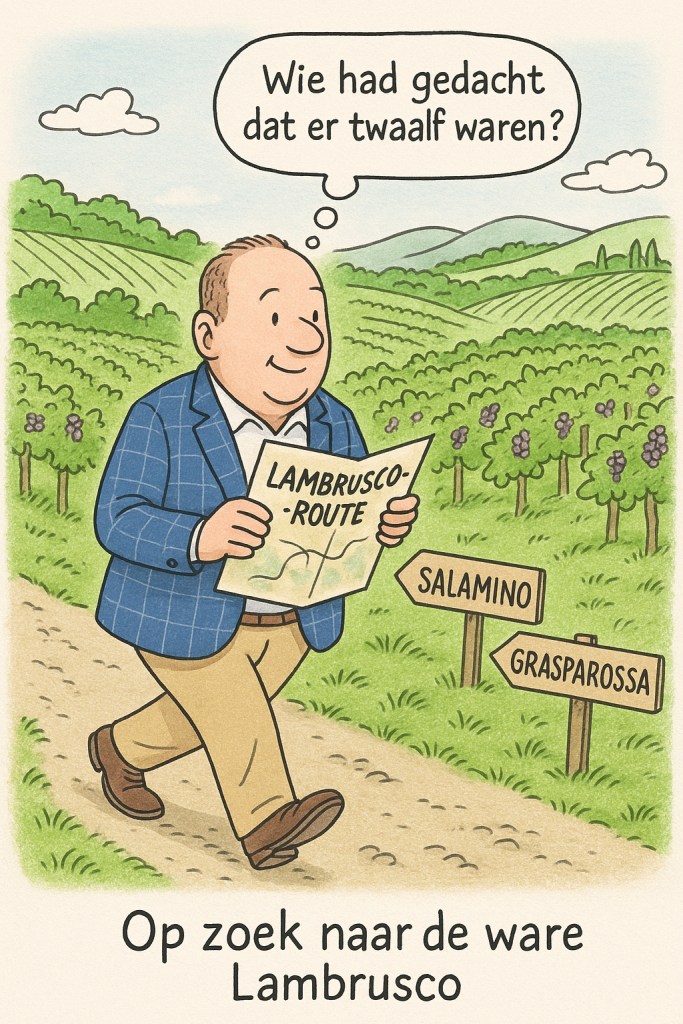
Wist je dat Lambrusco waarschijnlijk één van de oudste druivenrassen van Italië is, met een oorsprong als wilde wijnstok? En dat er niet één Lambrusco bestaat, maar twaalf verschillende variëteiten. Elk met hun eigen karakter, terroir en stijl? Tijdens de proeverij die volgde, proefde ik geen zoet plakkerig drankje, maar frisse, droge, verfijnde wijnen. Apart en niet alledaags, zeker, maar het contrast met mijn vooroordelen kon niet groter zijn.

Dat moment werkte als een vonk.
Sindsdien werd ik genoeg getriggerd om mezelf ertoe te zetten me te verdiepen in de wijn die ik nooit wist te appreciëren, en eindelijk te begrijpen waarom hij het verdient om herontdekt te worden.

Daarom deze nieuwe zondagse reeks ‘Lambrusco op zondag – tien weken lang schaven aan het imago’: een ontdekkingsreis langs de geschiedenis, druiven, regio’s en smaken van Lambrusco.

🍇 Wat mag je verwachten?

  1. Wat is Lambrusco?
    We trappen af met de comeback van een vergeten icoon. Hoe een wijn die ooit synoniem stond voor zoetigheid en eenvoud vandaag opnieuw respect afdwingt.
  2. Van wilde wijnstok tot klassieker
    De geschiedenis van Lambrusco: van Romeinse tijden tot hedendaagse heropleving. Hoe een wilde druif evolueerde tot één van Italië’s oudste wijnfamilies.
  3. Waar groeit Lambrusco?
    We trekken naar Emilia-Romagna en Mantova, waar de wijn zijn ziel vindt in vruchtbare bodems, zachte heuvels en een uitgesproken eet- en wijncultuur.
  4. Hoe wordt Lambrusco gemaakt?
    Van Charmat tot Classico en Ancestrale: de verschillende vinificatiemethoden die de stijl, structuur en verfijning van Lambrusco bepalen.
  5. De Lambrusco-familie
    Een fascinerende stamboom van twaalf belangrijke variëteiten — met een hoofdrol voor Sorbara, Salamino en Grasparossa.
  6. Sorbara & Lambrusco di Sorbara DOC
    De elegante, florale expressie van Lambrusco. Licht, levendig en verrassend verfijnd.
  7. Salamino & Lambrusco Salamino di Santa Croce DOC
    De fruitige, evenwichtige middenstijl: soepel, charmant en veelzijdig aan tafel.
  8. Grasparossa & Lambrusco Grasparossa di Castelvetro DOC
    De krachtigste van het trio: donker, intens en vol karakter.
  9. Meer dan de grote drie
    We ontdekken de overige appellaties, van Reggiano tot Modena, die het brede smaakpalet van Lambrusco vervolledigen.
  10. Lambrusco aan tafel
    Waarom Lambrusco zo’n uitzonderlijke gastronomische begeleider is — en hoe hij gerechten tot leven brengt.
  11. Bonus: Masterclass Lambrusco
    Een afsluitende proefsessie met 8 tot 10 wijnen, waarin we alles samenbrengen wat we onderweg hebben geleerd.

Deze reeks is er voor nieuwsgierige wijnliefhebbers, ontdekkers en fijnproevers die hun blik willen verruimen. Elke zondag schenken we je een nieuw hoofdstuk over Lambrusco: boeiend, verdiepend en vooral verfrissend anders.
Tijd om deze sprankelende Italiaan opnieuw op het schavot te plaatsen, en hem te proeven zoals hij echt bedoeld is.
🌿 Coto de Gomariz – pioniers uit het hart van Ribeiro

đź“… Zondag 23 november 2025
📍 Zaal De Vrede, Lichtaartseweg 131, Olen

Coto de Gomariz is een naam die klinkt als erfgoed in Ribeiro (Galicia). In de vallei van de Avia-rivier, waar al sinds de 10de eeuw wijn wordt gemaakt, ligt deze “Golden Mile of Ribeiro” – de oudste wijnstreek van het Iberisch Schiereiland en een bron van uitzonderlijke terroirs.

Het domein werd in de jaren 70 heropgebouwd door Ricardo Carreiro Ameijeiras, die na zijn terugkeer uit Zuid-Amerika zijn droom waarmaakte: Ribeiro opnieuw laten schitteren als historische wijnregio. Zijn zoon Ricardo Carreiro (Junior) zette dat levenswerk verder en transformeerde Coto de Gomariz tot een van de meest vernieuwende wijnhuizen van Galicia. Oude familiewijngaarden werden gecombineerd met nieuwe aanplant, steeds met de focus op terroir, authenticiteit en maximale expressie.

Sinds 2004 werken ze volgens ecologische principes geïnspireerd door Fukuoka, met groot respect voor het natuurlijke evenwicht van de wijngaard. De naam van het domein verwijst vandaag naar hun bekendste wijn: The Flower and the Bee – een symbool van harmonie tussen natuur en mens.

Te proeven wijnen:
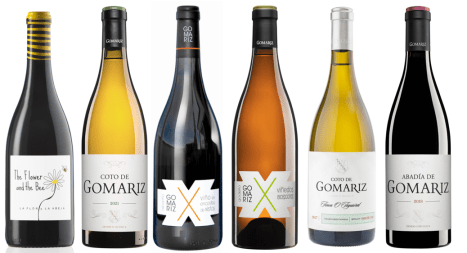
🥂 The Flower and the Bee Treixadura – biologisch geteeld en op de lie gerijpt: fris, levendig en mineraal met citrus, wit fruit en een subtiel zilt-bittere finale – een pure, karaktervolle wijn.
🥂 Gomariz White – blend van Treixadura, Godello, Loureira en Albariño: strak en mineraal, met citrus, witte bloesem en een vleugje gember; levendig en sappig, met die frisse spanning tussen sinaasappelzeste en limoen.
🥂 Gomariz X Albariño – Albariño van schistterrassen langs de Avia-rivier: helder, zilt en levendig met limoen, groene appel en abrikoos; fris-mineraal met een subtiel romig midden en een energieke finale.
🥂 Gomariz X Godello – Godello van de single vineyard O Taboleiro: intens en mineraal met kiwi, citruszeste en vuursteen; fris en gelaagd van smaak, met een lange, levendige afdronk.
🥂 Coto de Gomariz Finca o Figueiral – een meesterlijke wijn van Treixadura, Godello, Loureira, Torrontés, Lado en Albariño uit de single vineyard O Figueiral: rijk en complex met geel steenfruit, kweepeer, vijg en jasmijn; subtiele houttoets, perfecte balans tussen rijpheid, frisheid en mineraliteit – een wijn die simpelweg compleet aanvoelt.
🍇 Abadía de Gomariz – Sousón, Ferrol, Brancellao en Mencía, 12 maanden gerijpt op Frans eiken: donker kersenrood met aroma’s van rijpe kers, vanille en kruidigheid; levendige zuren en fijne tannine geven een harmonieuze, minerale rode wijn met verfijning en diepgang.

🎉 Wijnmaakster Inma Pazos en haar man Miguel Montoto zullen persoonlijk aanwezig zijn om deze wijnen te laten proeven en je mee te nemen in het verhaal van hun land, hun druiven en hun passie.

👉 Ontdek meer over dit huis op www.wijnkennis.be

Casauria DOCG, a New Milestone for Abruzzo

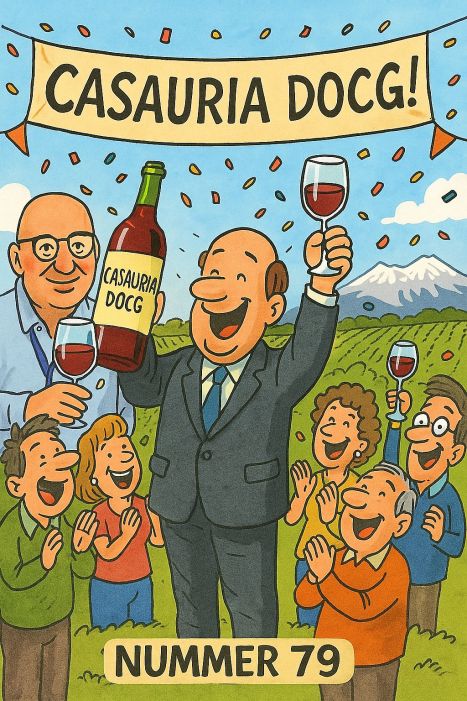
Although 11 November is not a public holiday in Italy, as it is in Belgium, the date will undoubtedly be celebrated with extra enthusiasm in Abruzzo from now on. Who knows, perhaps the traditional panarda feast will one day be moved to that moment. On 11 November, Casauria received official confirmation that it would step out from under the broad umbrella of Montepulciano d’Abruzzo DOC, its former parent appellation, and begin life as a fully independent DOCG. The European Union placed its final seal of approval on the decision, and for anyone with a soft spot for Abruzzo, this is far more than a footnote. It is a well-earned recognition for a region that has pushed itself upward with quiet determination and hard work. With this new designation, Abruzzo now counts three DOCG areas.

Where It All Began

Abruzzo has a habit of elevating its lesser-known corners to DOCG status. Tullum, granted the designation only a few years ago, was already a surprise, and Casauria builds on that momentum. Let’s be honest: aside from a handful of Italy enthusiasts, few wine lovers could confidently point to Casauria on a map. And yet, the area has everything required to justify a DOCG in its own right.

Casauria takes its name from the Abbey of San Clemente a Casauria, a Romanesque complex founded in the ninth century in the valley of the Pescara River. Historical sources suggest that the name may derive from Casa Aurea, the “golden house”, in reference to the exceptional fertility of the surrounding soils. That fertility is no coincidence. Wine has been part of this landscape for centuries. Ancient rock-hewn pressing basins such as the Palmenti di Pietranico, alongside the historical influence of the Benedictines, testify to a deeply rooted and continuous winemaking tradition.

Today, the DOCG spans several municipalities in the province of Pescara, situated on hills and plateaus between two hundred and six hundred metres above sea level. The climate is mild and sunny, with warm summers and pronounced diurnal temperature shifts. These variations are essential for Montepulciano, enabling full ripening while preserving natural freshness. Altitude, airflow, and sunlight provide the grape with a balance seldom achieved in lower-lying sites across the region.

A Disciplinare That Clearly Prioritises Quality

The disciplinare for Casauria leaves no room for ambiguity. It outlines a precise stylistic profile and a firm commitment to quality.

Key provisions at a glance:
• Red wines only, made from one hundred percent Montepulciano
• Minimum alcohol of thirteen percent, and thirteen-and-a-half for Riserva
• Mandatory ageing of eighteen months, or twenty-four for Riserva, counted from 1 November following the harvest; oak is optional, not required
• Maximum yield of nine thousand kilograms of grapes per hectare and sixty-three hectolitres of wine per hectare
• Minimum planting density of three thousand five hundred vines per hectare, or three thousand two hundred for pergola-trained vineyards
• Vinification, ageing, and bottling must take place within the designated area to guarantee traceability and quality

Even transport is regulated. Bottling outside the zone is prohibited because shifts in temperature, oxidation, or microbiological instability can compromise the wine once it leaves its place of origin. The message is unambiguous: a bottle of Casauria DOCG must be a product of the zone from beginning to end.

How Does Casauria DOCG Taste?

Curious what Casauria DOCG delivers in the glass? Expect a deep ruby colour with youthful purple reflections. The nose shows ripe red fruit layered with subtle spice. As the wine evolves, or when aged in oak, warmer and more complex aromas emerge, while the fruit retains its clarity.

On the palate, the wine is full-bodied and flavourful, with fine-grained yet clearly present tannin. The interplay of altitude, abundant sunshine, and wide day-night temperature swings contributes to natural balance. These conditions give Montepulciano both ripeness and tension, resulting in wines with depth, length, and a distinct sense of place.

Casauria offers immediate pleasure in youth yet possesses the structure to age gracefully. It is a more finely etched expression of Montepulciano, typical of the higher elevations around Pescara, marked by concentration, vibrancy, and refinement.

Why This Is Not Really a Surprise

The announcement may seem unexpected to the broader world, but within Abruzzo, and among more specialised wine circles, the region’s rise has been unmistakable. Abruzzo has largely shed its former association with simple, inexpensive bulk wines and now demonstrates convincingly that its hillsides and higher-altitude vineyards are ideally suited to producing quality wine. In an era shaped by climate change, these elevations offer welcome resilience and freshness.

Montepulciano has been the subject of extensive study in recent decades. The variety has sharpened its identity and shows remarkable sensitivity to terroir and microclimate. The selection of local clones such as VCR 456, the so-called Casauria biotype, highlights the purposeful work growers have undertaken to refine their wines. The result is a distinctive style with concentration, precision, and aromatic complexity that stands apart from other expressions of Montepulciano.

Casauria DOCG is therefore much more than a new name on the map. It signals Abruzzo’s intent to demonstrate its full potential. The region has every necessary asset: high-elevation vineyards, a defined microclimate, and producers who refuse to accept mediocrity and instead aim for genuine distinction.

For wine lovers, this is an invitation to rediscover Montepulciano in a purer, more precisely articulated form. Not mass-produced, but crafted with ambition and care.

Casauria DOCG Is Ready for Its Debut

With this recognition, Italy now counts seventy-nine DOCG areas. Expectations are high, yet the region remains grounded. The potential is significant and the disciplinare is crystal clear. Casauria DOCG has every opportunity to become a benchmark within Abruzzo.

The first bottles bearing the new designation are unlikely to appear before 2028. Each wine must age for at least eighteen months, starting from 1 November following the harvest. Since producers can only begin DOCG production with the 2026 vintage, the earliest release for standard Casauria DOCG is mid-2028. Riserva wines will follow later, toward the end of 2028. Patience will be required, but anticipation will only grow.

A personal note to close: a few months ago, during an interview for the Italian Wine Podcast, I asked Professor Attilio Scienza which regions he believed were closest to earning DOCG status. My suggestions were Cirò Riserva and Casauria. Both have now become reality. And DOCG number eighty? Most observers think it’s just a matter of time. Etna is waiting, patiently or otherwise, for the volcano to give its next signal.

Manque quelque peu de finesse!